
Gold Drops Below US$4,000 for the First Time in 2026: Correction or Long-Term Opportunity
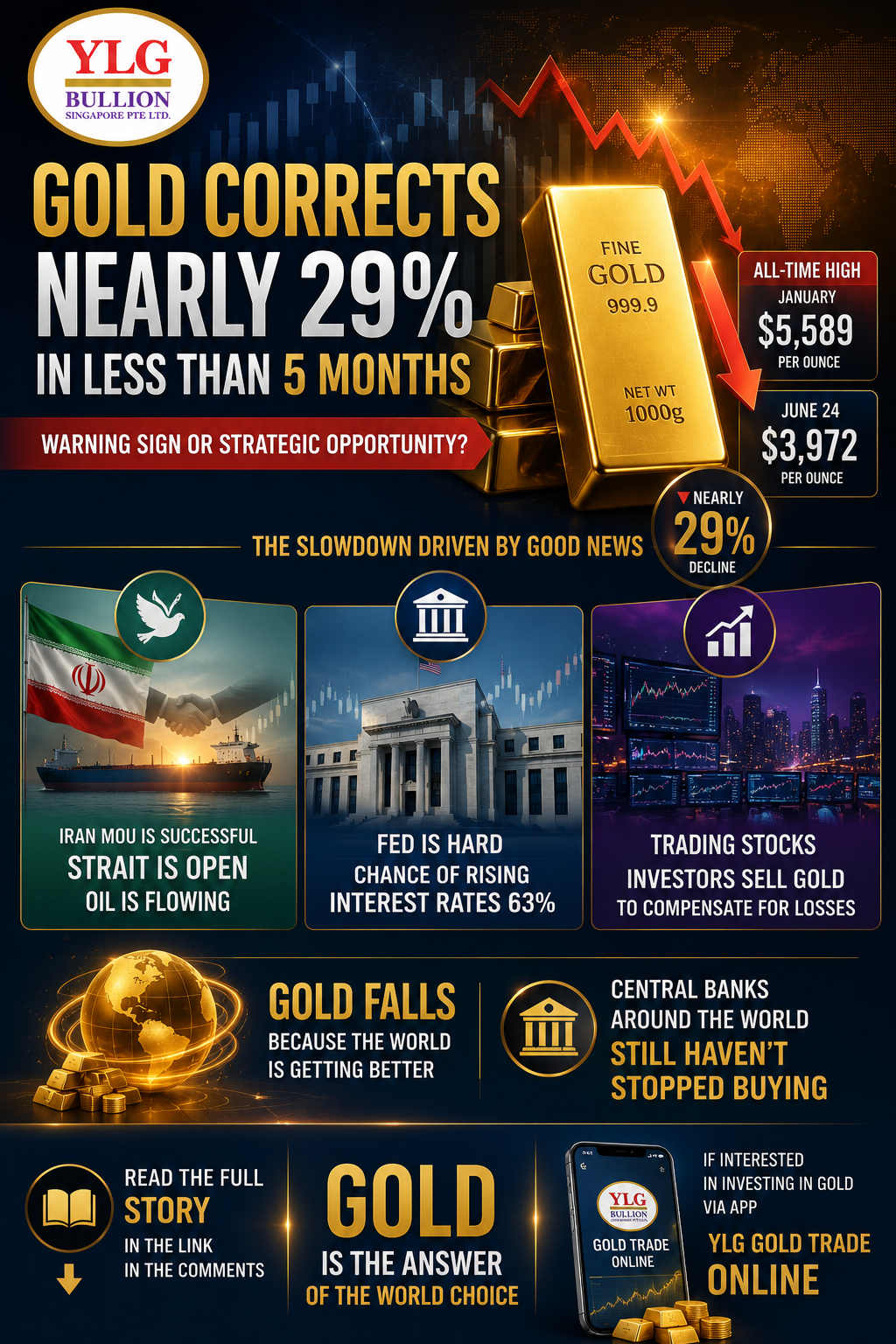
On 24 June 2026, the gold market experienced one of its most significant corrections in recent years. Spot gold briefly declined to approximately US$3,972 per ounce, marking the first move below the US$4,000 level since late 2025.
From its record high of US$5,589.38 per ounce reached in January 2026, gold has now corrected by nearly 29%.
What makes this decline particularly notable is that it has been driven largely by improving market sentiment rather than deteriorating economic fundamentals.
Why Did Gold Fall?
1. Geopolitical Risks Eased
Investor demand for safe-haven assets weakened following positive developments surrounding negotiations between the United States and Iran. Expectations of reduced geopolitical risk and uninterrupted energy supplies helped push crude oil prices lower, easing inflation concerns and reducing one of the major drivers that had supported gold earlier this year.
2. Hawkish Federal Reserve Expectations
Markets continue to anticipate a restrictive monetary policy environment, with expectations that U.S. interest rates could remain elevated for longer. Higher interest rate expectations strengthened the U.S. dollar and Treasury yields, reducing the relative appeal of non-yielding assets such as gold.
3. Rotation into Risk Assets
Improving investor confidence encouraged capital to flow back into equities and other risk assets. At the same time, some investors reduced gold positions to rebalance portfolios or meet margin requirements following increased volatility in equity markets.
Market Outlook
Several major financial institutions have recently revised their gold price forecasts in response to changing macroeconomic expectations. While some have lowered their near-term targets due to tighter monetary policy and improving risk sentiment, others continue to maintain a constructive long-term outlook, citing structural demand and ongoing central bank purchases.
This divergence reflects the current uncertainty surrounding inflation, interest rates, and global economic growth.
Three Possible Scenarios for Gold
Bearish Scenario
If inflation remains persistent, the Federal Reserve maintains a restrictive policy stance, and geopolitical tensions continue to ease, gold could remain under pressure with downside risk toward lower support levels.
Base Case
Gold may consolidate within a broad trading range as investors await greater clarity on future monetary policy, inflation trends, and global economic conditions.
Bullish Scenario
Should economic growth weaken, interest rate expectations shift lower, or geopolitical risks re-emerge, gold could regain momentum and resume its longer-term uptrend.
The Long-Term Story Remains Intact
Despite the recent correction, one structural trend continues to support the long-term investment case for gold.
Central banks around the world continue to accumulate gold reserves, reinforcing gold's position as a strategic reserve asset, portfolio diversifier, and long-term hedge against economic uncertainty, inflation, and geopolitical risk.
Historically, significant market corrections have often presented attractive entry opportunities for long-term investors rather than signaling the end of a bullish cycle.
Investment Perspective
Short-term price movements are likely to remain driven by monetary policy expectations, U.S. economic data, and geopolitical developments. Investors should continue to monitor these key catalysts while maintaining disciplined risk management.
Although gold has corrected nearly 29% from its record high, its long-term strategic role in global investment portfolios remains unchanged.
Stay informed with YLG Bullion Singapore for daily gold market analysis, investment insights, and professional trading strategies.