
Why Smart Investors Are Turning to Gold in 2026
Why Smart Investors Are Turning to Gold in 2026
Gold has once again become one of the most closely watched assets in global financial markets. As economic uncertainty rises and inflation continues to pressure traditional savings, professional investors are increasingly shifting toward gold as a long-term store of value and wealth protection tool.
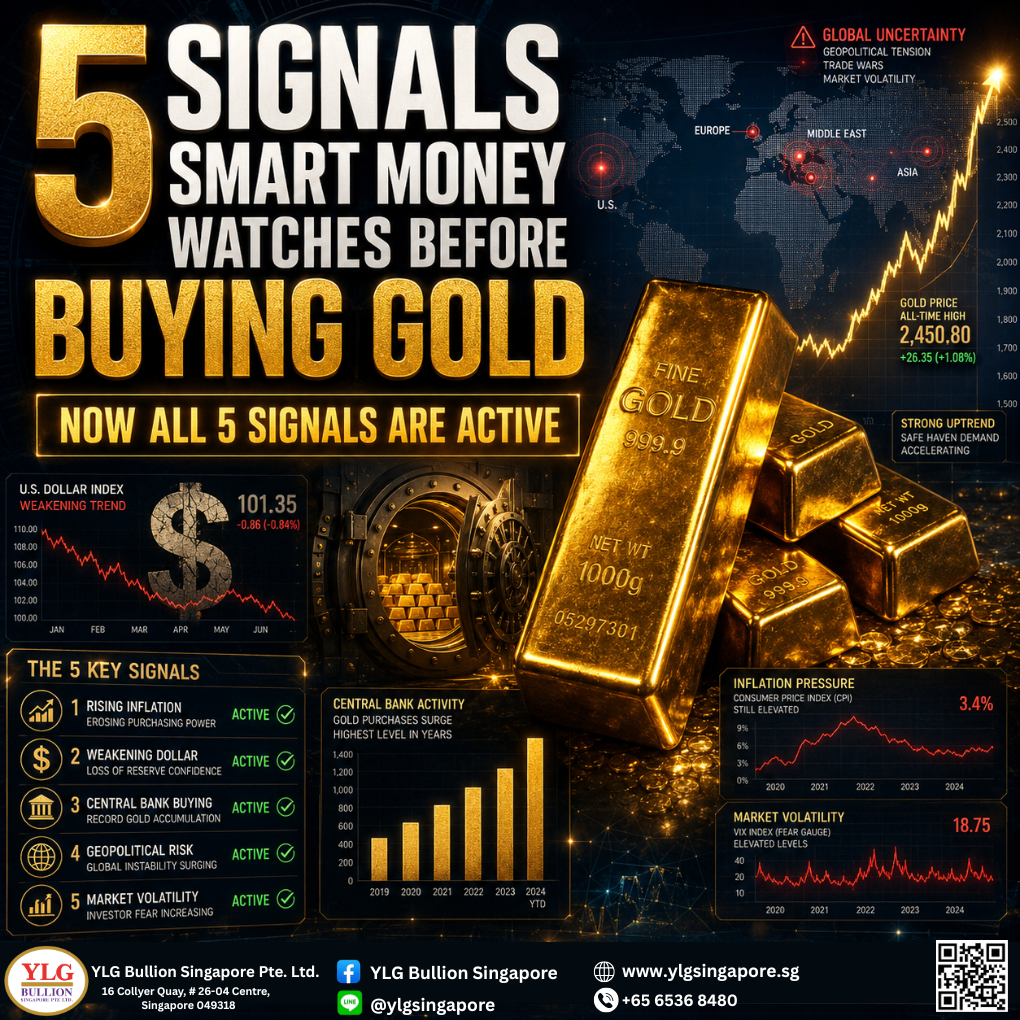
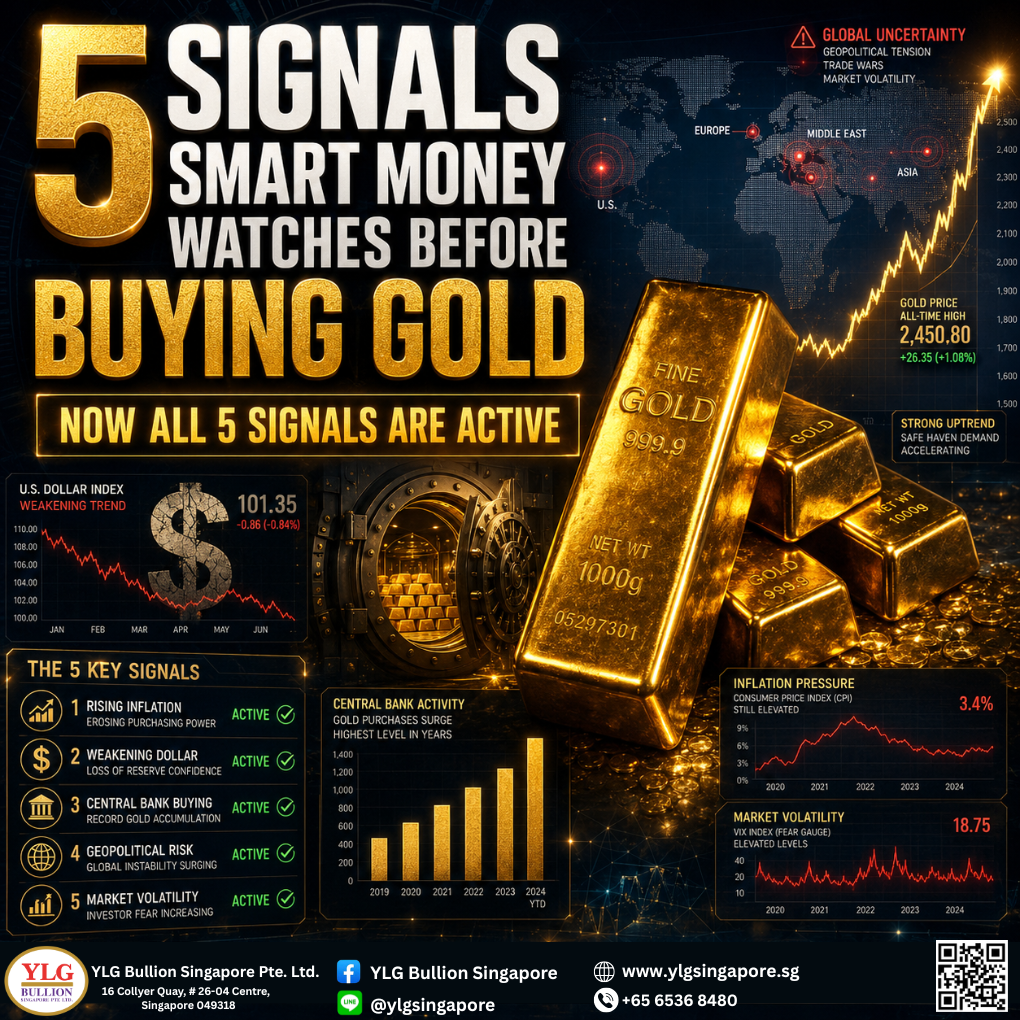
Market analysts point to five major signals that historically support stronger gold prices — and according to many investors, all five signals are currently active at the same time.
1. A Weakening U.S. Dollar Supports Gold Prices
Gold is priced globally in U.S. dollars. When the dollar weakens, gold becomes more affordable for international buyers using other currencies. This often increases global demand and can contribute to rising gold prices.
A weaker dollar also reduces confidence in fiat currency stability, encouraging investors to diversify into hard assets such as gold.
2. Low Real Interest Rates Increase Gold’s Appeal
Real interest rates are calculated by subtracting inflation from policy interest rates. When inflation remains higher than interest rates, investors may experience negative real returns on savings accounts and bonds.
In these environments, gold becomes increasingly attractive because it preserves purchasing power more effectively than low-yield fixed-income assets.
3. Central Banks Continue Accumulating Gold
One of the strongest long-term bullish signals for gold is continued buying from central banks.
According to recent market data, global central banks purchased a net 244 tons of gold during the first quarter of 2026 alone. This trend reflects growing demand for reserve diversification and concerns about long-term currency stability.
When the world’s largest financial institutions continue increasing gold reserves, many investors interpret it as a strong signal of confidence in gold’s long-term value.
4. Geopolitical Tensions Drive Safe-Haven Demand
Gold has historically performed well during periods of geopolitical instability and economic uncertainty.
Wars, trade conflicts, financial system concerns, and global political tensions often trigger increased demand for safe-haven assets. Investors frequently move capital into gold during periods of heightened market volatility because it is widely viewed as a defensive asset.
5. Inflation Is Outpacing Traditional Savings Returns
In many countries, savings account interest rates remain relatively low while inflation continues to rise.
For example, annual deposit returns of around 1–1.5% may not be enough to offset inflationary pressures. Over time, this can reduce the real purchasing power of cash savings.
As a result, many investors are increasingly turning toward gold to protect wealth against inflation risks.
All Five Signals Are Now Active
The combination of a weaker dollar, low real interest rates, aggressive central bank buying, geopolitical uncertainty, and persistent inflation has created a powerful environment supporting gold demand.
For many investors around the world, gold is no longer viewed only as a commodity — it is increasingly seen as a strategic asset for long-term financial protection in an uncertain global economy.